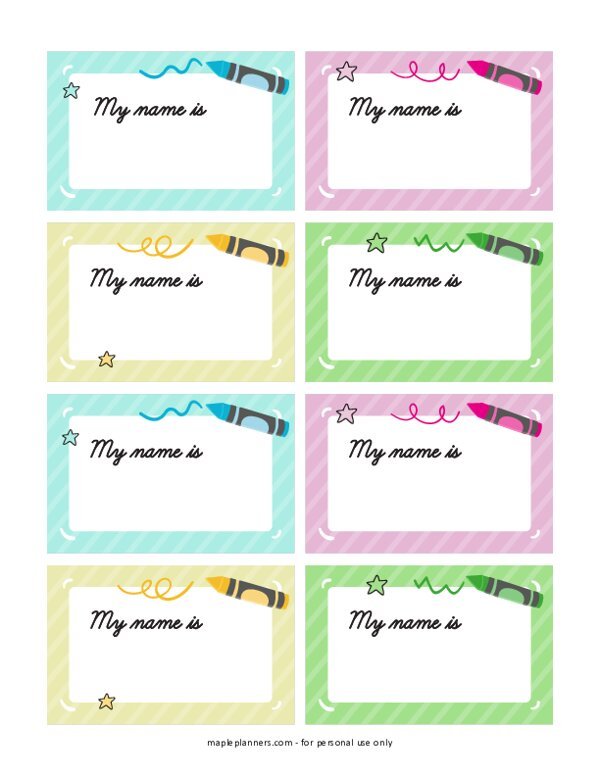
Think of a name tag not just as a piece of identification, but as a mini-billboard, a conversation starter, and a crucial component of your event's atmosphere. Designing effective name tags goes far beyond simply slapping a name on a sticker; it's about crafting a welcoming and professional first impression that significantly enhances the attendee experience. A well-designed name tag can melt away awkward silences, foster genuine connections, and streamline interactions, turning a room full of strangers into a network of engaged participants.
At a glance: Key Takeaways for Designing Effective Name Tags
- First Impressions Count: Your name tag is often the first visual interaction an attendee has with another person. Make it positive.
- Prioritize Readability: The most crucial element is that names and key information are effortlessly legible from a comfortable distance.
- Brand Consistency: Integrate your event or organizational branding seamlessly to reinforce professionalism and identity.
- Strategic Personalization: Go beyond just a name; consider adding roles, company, or even an icebreaker to spark conversations.
- Choose Wisely: Material, size, and fastener type impact comfort, durability, and the overall perception of quality.
- Leverage Technology: Utilize design tools and templates to create professional, consistent tags efficiently.
- Avoid Common Pitfalls: Don't overcrowd, use tiny fonts, or choose flimsy materials that detract from the experience.
Why a Thoughtful Name Tag is More Than Just a Label
In any gathering, from a casual mixer to a high-stakes industry conference, a name tag serves as the initial bridge between people. It's a silent facilitator of conversation, reducing anxiety and making interactions smoother. Without one, attendees often resort to awkward introductions, fumbling for names, or simply avoiding engagement altogether.
But the power of a name tag extends beyond basic identification. It’s a subtle yet potent tool for:
- Breaking the Ice: A clearly visible name eliminates the hesitation of forgetting or mispronouncing someone's name, encouraging immediate engagement.
- Fostering Connections: When company names, titles, or even specific interests are visible, it provides instant common ground for conversation. "Oh, you're from XYZ Corp? I've been meaning to ask about your new product!"
- Enhancing Professionalism: A cohesive, well-designed name tag reflects positively on your event or organization, signaling attention to detail and care for your attendees.
- Navigating Large Events: In crowded spaces, a clear name tag helps people quickly locate individuals they're looking for or identify event staff.
- Branding Reinforcement: Every name tag is a miniature ambassador for your brand, subtly reinforcing your logo, colors, and overall identity.
Ultimately, an effective name tag isn't just a convenience; it's a strategic element that contributes to the success of your event by making people feel more comfortable, connected, and valued.
The Anatomy of an Unforgettable Name Tag: Key Elements
Before diving into design specifics, let's break down the essential components that make up a truly effective name tag. Each element plays a role in its functionality and overall impact.
1. The Name (Prominently Displayed)
This is non-negotiable. The attendee's first name, often followed by their last name or at least initial, should be the largest and most legible text on the tag. Think big, bold, and centered, or left-aligned for a modern touch.
2. Affiliation (Company or Organization)
Knowing where someone works provides instant context and can spark professional discussions. Ensure the company name is clear but typically secondary in prominence to the individual's name.
3. Title or Role (Optional, but Often Useful)
Especially in professional settings, a job title can clarify expertise or hierarchical position, guiding appropriate conversations. For example, knowing someone is a "Senior Marketing Manager" tells you more than just their company.
4. Event/Organization Logo
Your logo solidifies the connection between the attendee and the event. It should be visible but not dominate, usually placed at the top or bottom of the tag, providing a sense of official recognition.
5. Event Name/Date (Optional)
For multi-day conferences or recurring events, a small mention of the event name or date can be helpful context for attendees. For single-day events, it might be redundant if the logo is prominent.
6. Unique Identifier (QR Code, Barcode, Number – Optional)
For registration, lead retrieval, or internal tracking, a QR code or barcode can be incredibly efficient. These are usually small and discreetly placed, often on the back or in a corner of the front.
7. Icebreaker Elements (Optional, but Highly Recommended)
This is where you move beyond mere identification. Consider adding:
- Industry Niche: e.g., "AI Ethics Researcher"
- Interest Tag: e.g., "Loves hiking," "Ask me about sustainable packaging"
- Pronouns: e.g., (she/her), (they/them) – a simple yet powerful way to promote inclusivity.
These small additions are conversation catalysts, giving people an immediate hook to approach someone new.
Mastering the Visuals: Design Principles for Readability and Impact
The aesthetic design of your name tags is paramount. Even with all the right information, poor design can render a tag useless. Here’s how to ensure your name tags are both beautiful and highly functional.
The Power of Typography: Choosing Your Fonts Wisely
Font choice isn't just about aesthetics; it's about legibility. The goal is instant recognition, not a deciphering challenge.
- Prioritize Sans-Serif Fonts: Fonts like Arial, Helvetica, Lato, Open Sans, or Montserrat are generally easier to read quickly, especially from a distance. Their clean lines prevent clutter.
- Avoid Script or Decorative Fonts: While pretty, they are notoriously difficult to read, especially for names that people aren't familiar with. Save them for branding elements, not core information.
- Font Size Matters Most:
- Name: Aim for at least 30-40pt for the first name (depending on the tag size). It should be legible from 3-5 feet away.
- Company/Title: 14-20pt, clearly secondary to the name.
- Other Information: 10-12pt, minimal and discreet.
- Contrast is King: Dark text on a light background (or vice-versa) offers the best readability. Avoid low-contrast color combinations (e.g., light gray text on a white background).
Layout and Information Hierarchy: Guiding the Eye
How you arrange information dictates what people see first and how easily they can process it.
- Top-Heavy Focus: The most important information (the individual's name) should be at the top and centered or prominently left-aligned.
- Ample White Space: Don't cram too much information. White space (or negative space) is your friend; it allows the eye to rest and makes the content appear less intimidating.
- Logical Flow: Arrange information in a natural reading order – typically name, then company, then title, then other details.
- Consistency: Maintain a consistent layout across all name tags. This creates a professional look and makes it easier for attendees to quickly scan for information.
- Consider Orientation: Most name tags are horizontal (landscape), which provides more width for names and company logos. Vertical (portrait) tags can be sleek but limit horizontal space.
Color Psychology: More Than Just Pretty Hues
Colors evoke emotions and can be used strategically to reinforce branding or differentiate attendee types.
- Brand Colors: Incorporate your event's primary and secondary brand colors. This builds instant recognition.
- High Contrast: Again, ensure text colors contrast strongly with background colors for maximum readability.
- Functional Color Coding:
- Attendee Types: Use different border colors, background colors, or colored ribbons for "Speaker," "Staff," "VIP," "Press," or "First-Timer." This helps attendees quickly identify relevant contacts.
- Industry Segments: In a multi-industry conference, color-coding by sector can help people find peers.
- Avoid Overuse: Too many colors can make a name tag look chaotic and unprofessional. Stick to a limited palette.
Graphics and Logos: Subtle Branding, Big Impact
Your logo is a vital branding element, but it shouldn't overshadow the person's name.
- Placement: Typically, the logo is placed at the top or bottom of the tag. A watermark effect in the background can also be elegant but must not impede readability.
- Size: The logo should be visible and clear, but secondary in prominence to the name. Avoid blowing it up so large that it pixelates or dominates the tag.
- High Resolution: Always use high-resolution versions of your logo to ensure crisp printing.
- QR Codes: If using QR codes for lead scanning or information, ensure they are large enough to be easily scanned by mobile devices and placed in a clear area.
Beyond the Design: Choosing Materials and Fasteners
The physical attributes of your name tag are just as important as its visual design. The right material and fastener contribute to comfort, durability, and the perceived quality of your event.
Name Tag Materials: From Paper to Permanent
The choice of material depends on your budget, event formality, and desired longevity.
- Paper/Cardstock Inserts with Holders:
- Pros: Most economical, easy to print on-demand, flexible for last-minute changes, easily created with online tools.
- Cons: Can look less premium, requires a plastic holder (which can be less eco-friendly), prone to creasing or tearing if not protected.
- Best For: Large conferences, casual events, budget-conscious gatherings.
- Self-Adhesive Labels (Stickers):
- Pros: Inexpensive, quick to apply, no need for holders or fasteners.
- Cons: Can damage clothing, often look less professional, prone to peeling or wrinkling, one-time use.
- Best For: Very casual meet-ups, workshops where formal appearance isn't critical.
- PVC/Plastic Name Tags:
- Pros: Durable, professional look, water-resistant, reusable for staff or volunteers.
- Cons: More expensive, less flexible for on-site changes (usually pre-printed), requires lead time.
- Best For: Corporate events, VIP gatherings, staff badges, long-term use.
- Metal Name Tags:
- Pros: Highly durable, premium and executive look, ideal for permanent staff badges.
- Cons: Most expensive, custom order only, not suitable for one-off event attendees.
- Best For: Senior leadership, permanent staff, high-end exclusive events.
- Eco-Friendly Options:
- Consider recycled paper, biodegradable plastics, or bamboo/wood tags. Sustainable choices resonate with environmentally conscious attendees.
Fasteners: Comfort, Security, and Style
The way a name tag attaches to clothing impacts comfort, security, and the potential for clothing damage.
- Lanyards:
- Pros: Highly visible, comfortable, prevents clothing damage, great for holding other items (keys, badges), customizable with branding.
- Cons: Can swing and be distracting, prone to twisting, can be a safety hazard in certain environments (machinery).
- Best For: Conferences, trade shows, events requiring visible credentials.
- Magnetic Fasteners:
- Pros: Strong hold, no pinholes in clothing, sleek appearance, reusable.
- Cons: Can detach if bumped aggressively, not suitable for pacemakers or sensitive electronics, generally pricier.
- Best For: Professional events where clothing preservation is a priority, recurring staff.
- Pin Backs:
- Pros: Secure, traditional, cost-effective.
- Cons: Punctures clothing (potential damage), less comfortable for long wear, can spin if not carefully pinned.
- Best For: Budget-conscious events, temporary staff, situations where lanyards aren't ideal.
- Clip Fasteners (Alligator Clips):
- Pros: Secure, attaches to pockets or lapels, no clothing damage if used correctly.
- Cons: Can pull on delicate fabrics, may not work on all clothing types.
- Best For: Uniformed staff, casual events, where lanyards are too informal.
Pro Tip: Always have a variety of fasteners available at registration. Some attendees prefer magnets, others lanyards, and offering a choice demonstrates thoughtfulness.
Crafting Connections: Personalization Strategies
Moving beyond the basic "Name, Company, Title" dramatically increases the effectiveness of your name tags. Thoughtful personalization transforms a simple ID into a networking superpower.
1. Roles and Responsibilities: Clarifying Expertise
Beyond a formal job title, consider including a specific role relevant to the event.
- Instead of just "Marketing Manager," try "Speaker," "Panelist," "Event Volunteer," "Lead Organizer," or even "Mentor."
- This immediately signals who to approach for specific needs or information.
2. Icebreaker Information: Fueling Conversations
This is perhaps the most underutilized aspect of name tag design.
- "Ask Me About..." prompts: This is fantastic. Examples: "Ask me about AI in healthcare," "Ask me about sustainable travel," "Ask me about my favorite local restaurant." This creates an immediate, low-stakes opening.
- Skill Sets/Interests: A small icon or text indicating "UX Design," "Data Analytics," "Gardening Enthusiast," or "Blockchain Advocate" can help people find common ground beyond their professional roles.
- First-Timer Indicator: A special badge, color, or ribbon for "First-Time Attendee" can encourage veterans to offer guidance and welcome new participants.
3. Pronouns: Promoting Inclusivity
In today's diverse environments, offering the option for attendees to include their pronouns (e.g., she/her, he/him, they/them) is a simple yet powerful gesture of inclusivity and respect. Make this an optional field during registration.
4. Headshots (for Speakers/VIPs): Instant Recognition
For speakers, keynotes, or VIPs, a small, professional headshot on their name tag can be incredibly helpful for attendees looking to connect a face to a name, especially after a presentation. Ensure the photo is high-quality and not too large.
5. Social Media Handles: Digital Connectivity
For digitally-savvy events, including a Twitter handle or LinkedIn icon can facilitate post-event connections, making it easier for attendees to find and follow each other online. Keep it concise.
Key Principle: The goal is to provide just enough information to spark curiosity without overcrowding the tag. Think of it as a helpful hint, not a full bio.
Leveraging Technology: Designing with Ease and Precision
The days of handwriting every name tag are (thankfully) largely behind us. Modern tools make designing and printing professional name tags efficient and accessible.
Online Design Tools and Templates
Many platforms offer user-friendly interfaces to create custom name tags without needing graphic design expertise.
- Avery.com/templates: As highlighted in our research, Avery offers a vast library of free templates sized to fit their various name tag products. This is an excellent starting point for those printing at home or using standard holders.
- Canva, VistaCreate, etc.: These platforms provide drag-and-drop interfaces with access to numerous fonts, graphics, and pre-made templates that can be customized for name tags.
- Event Registration Platforms: Many event management software solutions (Eventbrite, Cvent, etc.) now include integrated name tag design and printing functionalities, often pulling attendee data directly into templates.
Printing Options: In-House vs. Professional Services
- In-House Printing:
- Pros: Cost-effective for smaller quantities, immediate changes possible, great for last-minute registrations.
- Cons: Requires quality printer and supplies, can be time-consuming for large events, print quality may vary.
- Best For: Smaller events (under 100 people), tight budgets, or events with high rates of on-site registration.
- Professional Printing Services:
- Pros: High-quality output, access to specialized materials (PVC, metal), saves time and labor, consistent results.
- Cons: More expensive, requires lead time, less flexible for last-minute attendee changes.
- Best For: Large conferences, premium events where presentation is key, when specific materials are desired.
Expert Insight: For maximum efficiency at large events, consider a hybrid approach: pre-print the majority of attendees professionally, then have a robust on-site printing station for last-minute registrations and corrections.
Common Pitfalls to Avoid: Don't Let Your Name Tags Fail
Even with the best intentions, it's easy to make mistakes that undermine the effectiveness of your name tags. Be mindful of these common missteps:
- Tiny Text: The cardinal sin of name tag design. If people have to squint or get uncomfortably close to read a name, the tag has failed. Prioritize size and legibility above all else.
- Information Overload: Resist the urge to cram every piece of information onto a small tag. Too much text creates clutter and makes everything harder to read. Less is often more.
- Poor Contrast: Light grey text on a white background, or busy patterns behind text, are readability killers. Ensure high contrast between text and background.
- Flimsy Materials: Cheap paper or thin plastic holders that bend, crease, or tear easily reflect poorly on your event and create a negative experience for attendees. Invest in reasonable quality.
- Awkward Placement/Fasteners: Tags that constantly flip over, dig into skin, snag clothing, or hang too low (hitting tables when leaning in) are frustrating. Test your fasteners and placement.
- Inconsistent Design: Different fonts, layouts, or colors across different tags make an event look disorganized and unprofessional. Maintain a consistent brand identity.
- Ignoring Inclusivity: Forgetting pronouns or not offering options for larger fonts for visually impaired attendees can exclude or make people feel unwelcome.
- No Emergency Plan: What happens when someone loses their tag? Or registers on-site? Have a system in place for quick reprints or replacement tags.
Advanced Considerations for Specific Event Types
The "perfect" name tag isn't one-size-fits-all. Tailor your design choices to the unique nature of your event.
1. Corporate Conferences & Trade Shows
- Focus: Professionalism, clear identification, networking facilitation.
- Key Elements: Name (large), Company, Title, Event Logo, often a QR code for lead retrieval.
- Material/Fastener: PVC or high-quality cardstock in holders with lanyards or magnetic fasteners.
- Advanced: Color-coding by industry, speaker/sponsor identification, social media handles.
2. Networking Mixers & Social Events
- Focus: Ice-breaking, casual interaction, fun.
- Key Elements: First Name (very large), Icebreaker prompt ("Ask me about..."), perhaps a small company logo.
- Material/Fastener: Self-adhesive labels or simple cardstock with pin/clip. Could be more creative shapes.
- Advanced: Interactive elements (e.g., "What's your superpower?"), blank space for attendees to write something.
3. Internal Company Meetings & Workshops
- Focus: Team building, collaboration, internal recognition.
- Key Elements: Name, Department/Team, Company Logo, maybe a fun fact or personal interest.
- Material/Fastener: Reusable PVC tags with magnetic fasteners, or simple cardstock.
- Advanced: Team-specific branding, small photos for larger companies.
4. Educational Seminars & Training Sessions
- Focus: Learning environment, easy identification of facilitators.
- Key Elements: Name, Role (e.g., "Facilitator," "Participant"), Organization.
- Material/Fastener: Lanyards or magnetic fasteners for trainers, simple cardstock for participants.
- Advanced: Badges indicating certifications or areas of expertise for instructors.
5. VIP & Exclusive Events
- Focus: Premium experience, subtle elegance, security.
- Key Elements: Name, discreet company, minimalist design.
- Material/Fastener: High-quality PVC, perhaps a custom cut, with sleek magnetic fasteners.
- Advanced: Embossed logos, metallic finishes, subtle security features.
The Sustainable Name Tag: Designing with the Planet in Mind
As event planning becomes more conscious of its environmental footprint, so too should name tag design.
- Recycled Materials: Opt for name tag holders and inserts made from recycled paper, cardstock, or post-consumer plastics.
- Biodegradable Options: Explore tags made from compostable or biodegradable plastics.
- Reusable Solutions: For staff, volunteers, or recurring events, invest in high-quality, durable name tags (like PVC or metal) that can be collected and reused.
- Digital Alternatives (Partially): While not a full replacement, QR codes can link to digital business cards or event schedules, reducing the need for additional printed materials.
- Minimalist Design: Reduce ink usage by keeping designs clean and simple, with plenty of white space.
- Recycling Program: Set up collection bins for used name tag holders and lanyards at the end of the event, clearly marked for recycling.
Your Action Plan: A Step-by-Step Guide to Effective Name Tag Design
Ready to design name tags that genuinely enhance your event? Here's a practical workflow to guide you.
Step 1: Define Your Event's Purpose and Audience
- What kind of event is it? (Conference, casual mixer, internal meeting?)
- Who are your attendees? (Professionals, students, general public?)
- What's the overall tone? (Formal, relaxed, innovative?)
- This will inform your choices on formality, information hierarchy, and creative elements.
Step 2: Gather Essential Information
- List required fields: Name (First, Last), Company, Title.
- List optional fields: Pronouns, "Ask me about..." prompts, social media handles, QR codes, attendee type.
- Collect this data during your registration process.
Step 3: Choose Your Material and Fastener
- Budget: What can you realistically spend per tag?
- Durability: How long do they need to last? (Single day vs. multi-day event)
- Comfort: Which fastener will be most comfortable for your attendees?
- Consider ordering samples if unsure.
Step 4: Design the Layout and Visuals
- Start with the name: Make it the largest and most prominent element.
- Incorporate your branding: Place your logo tastefully.
- Select legible fonts: Stick to sans-serif for main text.
- Choose high-contrast colors: Ensure readability.
- Create information hierarchy: Guide the eye from most to least important.
- Utilize white space: Avoid overcrowding.
- Use design software or an online name tag generator for this step.
Step 5: Proofread Meticulously (and Get a Second Opinion)
- Check every name for spelling errors.
- Verify company names and titles.
- Ensure all logos and QR codes are correct and functional.
- Print a few test tags to check size, readability from a distance, and color accuracy.
- A fresh pair of eyes can catch mistakes you've overlooked.
Step 6: Plan for Production and On-Site Management
- Printing: Decide between in-house or professional printing. Factor in lead times.
- Sorting: How will tags be organized for quick pick-up at registration? (Alphabetical, by company, by attendee type?)
- On-Site Contingency: Have blank tags, a printer, and staff ready to handle last-minute registrations or reprints.
Cultivating Connection, One Tag at a Time
Designing effective name tags is an art and a science. It's about blending visual appeal with practical functionality, creating a miniature communication tool that speaks volumes. By thoughtfully considering typography, layout, materials, and personalization, you're not just organizing an event; you're cultivating an environment where connection thrives. When attendees feel seen, respected, and empowered to engage, your event transcends mere logistics and becomes a memorable experience. Invest in your name tags, and watch your event flourish.